Dear Reader
You have probably heard about King Arthur and his knights of the round table. It is hard to miss them in modern culture. It seems that they are always appearing in books, TV series and movies, and most people can recount at least the story of how Arthur draw the sword from the stone, becoming King of England through passing the trial. We've become some familiar with the stories, that often, we do not consider where they came from, or the many sources that make up what we now call the Matter of Britain.
These stories are so often retold, with both old and modern ways of seeing the story, but one of the reason that we have so much of it is the resurgence of Arthurian literature during the Second World War. This time marks the sudden rebirth of King Arthur into the modern mind, with classics such as The Once and Future King, being published and widely read and beloved by much of the English population at the time. It could even be claimed that the reason for our current stories around the king, owe something to this phenomenon.
Something in the Matter of Britain was latched onto by the British during one of their most difficult times in recent history. Something about the stories, as discordant as they are, seems to have resonated with the British mind during the war, causing so many novels, poems and dramas to have been created around a king who might or might not have even existed.
I invite you, Reader, to come with me as I examine just what that was.
Picture This
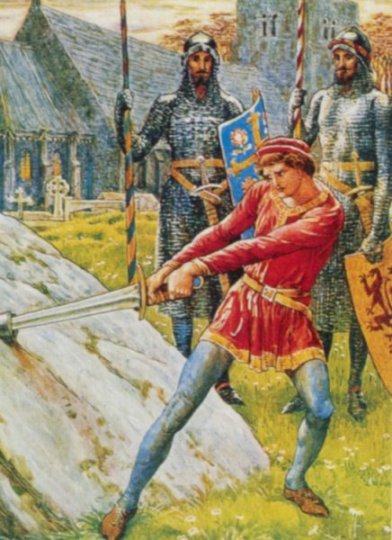
A young man stands, a sword in his hands, pulling it out from a stone. This is the pivotal moment of his life. No matter what happens afterwards, regardless of the fate that awaits him and the battles that he knows that he will have to fight, it is all dependent of the fact that he was able to preform this feat when no one else could. It is this moment, more than any other, that will be recreated time and time again in countless different ways over the years. It is one of the few consistent moments in what is now called the Matter of Britain. King Arthur is able to perform a feat that no one else could, and for those around Arthur, this is also the essential moment. Britain, once divided, will be reunited and brought together under the ideals of the new king.
At the same time, the picture is untrue. Arthur and the watching knights wear clothing from another century, long after the Dark Ages where he lived. This picture was made long after Arthur, if he existed, lived and died.
The picture is looked at by someone else, still British, but living in World War II. This observer has an entirely different view of the world than Arthur or his original onlookers would have had, and yet the picture and the story behind it remains well loved and well remembered by the population and modern onlooker.
What does the person living in World War II really see when they look at this picture? Is it just a favorite legend or something else?
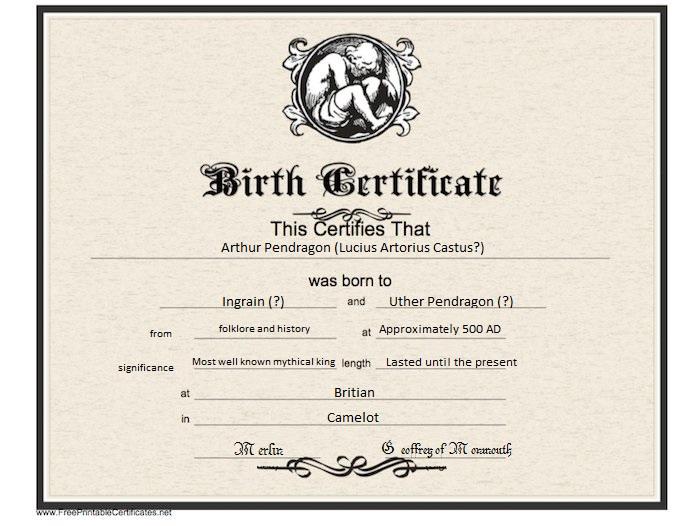
Birth
differences
Monmouth Mallory
The greatest act of the knights was The greatest act of the knights was
Uniting Britain. Retrieving the Holy Grail.
The greatest of the knights were The greatest of the knights were
Sir Kay, Gawain, and Bedivere. Sir Lancelot and Sir Galahad.
This is the greatest chronicle of the king This is the greatest romance of Britain
where Queen Morgan the healer took Arthur, where Morgan Le Fay hated Arthur,
and Merlin vanished, Merlin was killed,
but Arthur's wounds are tended in Avalon and Arthur died, but yet
and another took his crown. he may come again.
Recipe to create an epic
1 Flawed hero
1/2 cup of actual history (less if desired)
1-2 cups of chivalry (more if romance is desired)
a pinch of magic
1/4 of a Messianic archetype
At least four pre-prepared folktales (can be from France or England)
Take the hero and and add the magic carefully. Stir until well blended and sword appears. Add in actual history to the amount preferred. (Note: the less history used makes the taste of magic much more noticeable.) Add in the Messianic archetype until it is thoroughly bonded. Make sure to add in the pre-prepared folktales to taste, adding variety as needed. Spread over England and France, and then cut into shapes if desired.
Allow to sit. Mixture will gain in flavor as it sets and new folktales and ingredients are added over time. Preheat oven to "time of national emergency" and cook for one year. Serves: One nation.
Darkest Hour
The shelter shook slightly every time that the bombs hit the ground. Tom, his mother and Millicent, his younger sister, all sat, huddled together, listening to the blasts above them and, if Tom listened carefully, the dogfights. In the dim lamplight from the shelter, his mother always looked older and more drawn when she looked at them. Millicent cried out slightly as a blast rocked the entire structure, causing the light to flicker and dust to scatter all around them. That was too close. Tom didn't want to cough. He didn't even want to breathe. He knew that it was stupid, and that the Nazi planes were far above them, but some childish part of him wanted to hold his breath and stay quiet.
All of them sat still, looking up, and listening for any more bombs, Millicent let out another choking sob, and Tom tried not to imagine his father up there. Before the attacks, back when war was still glorious and heroic, those visions had involved his father bravely fighting off the Nazis, but now they were darker, and sometimes, the Nazis won.
Another sniff from Millicent stirred him out of his thoughts as he looked around for something to distract her with. Their mother was too busy pretending to knit, listening to the bombs, and possibly wondering if maybe she should do what the flyers said and send them to the relative safety of the country. She would knit and listen, and they would sit and listen. The shelter had blankets in it, though they rarely slept. There were also unread books scattered around what little room was left. Back when it had been being built, Millicent had been more excited than scared. She'd brought some books so that she could pass the time.
He grabbed one of those at random now. King Arthur and His Knights the title read, showing a worn picture of a young, blond haired boy holding Excalibur aloft. Well, he supposed, that was at least something where the battles were won. Even if it had a stupid ending, at the very least, it was something that could give them something else to think about.
"Chapter One," he started reading aloud, closed his eyes once as a far too close explosion rocked the building and deafened him for just a moment but keeping his voice as steady as he could. For a moment the other two started, and looked at him strangely for breaking the silence between them, but Tom didn't look up.
"The Sword in the Stone."
Unity
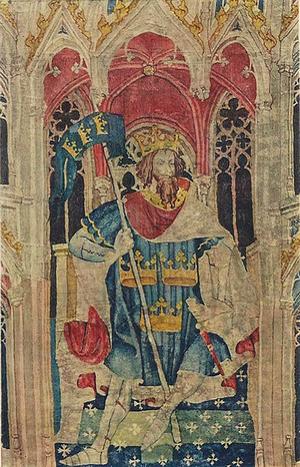
The Matter of Britain is actually a term for a loosely connected, and sometimes even contradictory, stories that center around the exploits of King Arthur and his knights. Some, like Sir Lancelot, are actually from a completely different set of folktales, often French but some Welsh, that are eventually added into the Matter of Britain. Others, like Sir Galahad, were intentionally added as a way to show ideals of Christian knighthood (Coghlan, 1993, pg. 107). Over the course of the stories, roles of characters change greatly from their originals. Queen Morgan, the benevolent ruler of Avalon in Monmouth's History of the Kings of Britain, is replaced with Morgan Le Fay, the vengeful sister of Arthur in Mallory, and Mordred, a rival contender for the throne becomes Arthur's son through incest. Yet, somehow, these stories all eventually come together to become a clearer and more defined until the Matter of Britain was one of the most famous stories about medieval Europe. While there are several stories of mythical kings, there is none that is as well known as that the Matter of Britain.
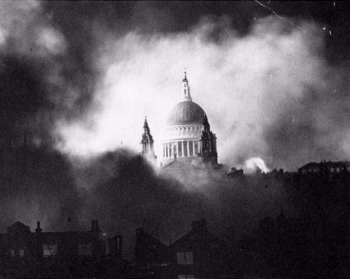
While the stories remained well known and were popular sources for artists, during the Second Would War, Arthurian literature, poetry and imagery rose to a new height. This was a golden age of Arthurian literature, when some of the most influential stories, such as T.H. White's Sword in the Stone were published. Experts tend to speculate on the reason for this sudden influx of Arthurian literature, debating over the true reason for it's resurfacing. Some claim that the reason had to do with the idea of a "dream of a happier time" (King Arthur in Popular Culture, 2002, pg. 56) where there was no war, and the world could be divided into good and evil. Others question if maybe the themes of war, and the idea of heroism in the face of invasion also inspired this literary resurrection.
Overheard 1939
Thompson: There's been a lot of talk about King Arthur recently.
Churchill: Yes. I'm glad of it.
Thompson: Really?
Churchill: The people need a hero right now. They need examples of courage in dark times. I expect that artists and entertainers have realized the same thing. The radio is even starting to call our RAF the new knights.
Thompson: I'm skeptical that old stories about knights and wizards will be able to do much to inspire the British people.
Churchill: Knights, wizards, miracles, chivalry, right, wrong, and a struggle in the face of tremendous odds. Aren't many of those the same ideas that I've been talking about since I've been named Prime Minister? It is in the very language. I doubt that we'll be seeing much of the good king in the radio to the British Expedition, but the people on the home front also need to keep their moral boosted. I expect that, should France fall, they'll need it even more.
Thompson: You believe that Hitler will attack the island?
Churchill: Of course he'll attack the island. He'll try to soften us up. Break our spirits, so that we can't fight anymore. Then he'll come in, promising peace and deliver us into a slavery we didn't think was possible, with the false and perverted science of Nazi Germany justifying it the whole way.
Thompson: And then?
Churchill: Then nothing. It will not happen. We will stand, even if we have to stand alone with nothing but our own bodies, old mythical kings and anything else that we can prop up to give us strength. Besides, if Himmler thinks that he can make up a German mythology to help them, then why not use a myth that at least as a foot in the realm of truth ?
Thompson: I see, sir.
Broadcast
The Blue Hour
It took no time at all for King Arthur and His Knights to be the main book that was read in the evening. Through the wavering light of the one lantern in the shelter, as the sounds of planes and bombs raged around them, Tom continued on until his voice broke, and still his sister begged for more.
Tom hadn't read the stories in ages. He'd given up the book as mostly for little children, and he wasn't sure how much his opinion had changed over the time reading.
Millicent, on the other hand, loved it. She talked about it constantly and insisted that they continue reading it. Once it was done, she begged their mother to buy The Sword in the Stone. After listening to the drama, she wanted to hear more about Wart and how he had trained with Merlin, or Merlyn, as White called him.
The drama and the book and everything else happening did something else though. They made Tom aware that King Arthur was suddenly everywhere. Oh, he had seen it, he'd heard the pilots being called knights of the air and noticed that there were more and more plays that seemed to be around King Arthur and his life than before, and more poems in magazines talked about him (some were dead depressing) but somehow, reading the book made that all the more obvious.
Honestly, Tom found it annoying.
He wasn't sure why this was suddenly happening, and it seemed that their mother was more than willing to go along with her daughter's love for it. Which was how he found himself at a matinee for a musical about the king. It was designed for any of the children who were still in the city, so, while several other parties and events would be lasting through the night, Germans or no, this was a very shortened version of the myth. Lancelot and Guinevere's love story wasn't even in it. Tom honestly wasn't expecting for it to even run to the end of the story.
He was very wrong.
As the actor playing Arthur was born away on the ship by Morgan (despite the fact that she had been trying to kill him though half of the play), Merlin stepped out from behind a tree, looking old and sober.
"And so ends our tale of Arthur," he said, raising one hand, "The great king, his kingdom, and the ideals of the round table have crumbled."
At that point he heaved a great, dramatic sigh, and Tom suppressed the urge to roll his eyes.
"Yet, have hope, Oh People," Merlin continued, "For, though Arthur may have passed through the veil to Avalon, it has been said, that in our greatest hour of need, he and all of his glittering court will return to us!"
The audience applauded, but Millicent was still, watching the stage. It was only when Tom gently touched her shoulder that she looked up at him.
"Why didn't they show him coming back?" she asked.
Tom blinked, and then mentally sighed.
"I guess because he hasn't yet," Tom said with a shrug, helping her up and to the exit.
Outside, the sun was setting. They were going to need to return quickly. Once the sun was down and blackout shades had been drawn, it wasn't easy to navigate the city. Worse, there was always the threat of air raids. Tom and Millicent made their way, looking at the darkening sky and the buildings, some of them damaged, standing against it almost like ragged teeth.
"I think that he'll come back," Millicent said out of the blue.
For a moment, Tom paused. Should he just tell her that she was wasting her time with a stupid fairy tale?
"He's going to come back, and Dad's going to come back, and everything will be fine," Millicent said with all the assurance of a seven-year-old who still believed in Father Christmas and fairies.
And, somehow, Tom didn't have the heart to shatter that right now. She was smiling, even though the buildings around them were wrecked, and there had been a bomb that had gone off on the street close to their house, and they might have died so many times already. She was still smiling.
"We'll see."
Definition
Matter (n): A substance that makes up the very fabric of existence.
Ex: The Matter of Britain defines, at some level, what it is to be British, so it is only natural that, when a national emergency occurs, the unifying ideals of the Matter of Britain would experience a resurgence in the form of poetry, fiction, and drama.
A Question
What brings us back to King Arthur?
Is it the court?
Where knights in gleaming armor
and ladies in all their finery
stood together after a broken world was made whole.
Is it the table where long ago men sat together?
Where no one was better than the rest
a circle of friends and equals,
long before any dream of democracy?
Is it the ideal
of justice, chivalry and bravery,
of standing and never yielding
even when the odds seem unbeatable?
Is it the flaws?
Arthur, Merlin, Lancelot and Guinevere:
all good people but people nonetheless
reflecting our own tragedies.
Is is the promise?
Someday, in our darkest hour,
a hero will come to save us,
just like he was said to have a long time ago.
Maybe, it is all of these things,
connected on the threads of time and fear and hope
that weave the tapestry
of Europe's most famous king.
Finest Hour
The end of the war was met with celebration in London, but for Tom, it was met with numbness. After nearly a year of the bombings, of school being closed, of uncertainty, the fact that suddenly everything was just over was almost surreal. In a hastily written, excited letter, his father had mentioned that he was coming home. Germany and surrendered, and Japan was on its knees.
The war was over. Or it might as well have been over. Hitler, the monster that was characterized in so many pictures, was dead. Tom should have felt happy, but all he felt was a kind of disbelief that this was really happening. He was half expecting to wake and find that everything had been a dream. The shelter was going to be taken down, buildings rebuilt, schools reopened, and life was going to return to the way that it had been before the war. It was only when Tom was helping his mother to take out some of the remaining, mostly unused, sheets from the shelter when he remembered that one of the books that they had been reading before the war was The Idles of the King.
"Well, I suppose that King Arthur didn't make his appearance," Tom said to his mother.
He expected her to laugh a little, after all, she'd been quietly avoiding most of the King Arthur centered things, even though she'd bought tickets and books, but she gave him a curious look.
"What makes you say that?"
For a moment, all Tom could do was stutter,
"W-well, of course he didn't come!" he said, "We would have seen him!"
His mother laughed a little at that.
"Maybe in a way, he did come," she said. "He certainly held your sister together, didn't he?"
"Those were just the stories," Tom said, crossing his arms.
"Does it matter? When we needed someone to believe in, he came back. Maybe it was not the way that the stories say, but it seems to me that what he did meant a lot more to Britain than we know. We held firm, and I think that King Arthur helped us to do just that. It was the finest hour for all of us. Maybe even for fairy tales."
Tom wanted to argue, and say that fairy tales didn't win the battles, but he didn't. Because he had a memory of Millicent, smiling in the twilight, looking at the ruined buildings and ready to face whatever the night would bring. Maybe the reality of King Arthur or how the stories were always different didn't matter. And, after all, he'd been the one to reach for it first. Maybe, this was better. Maybe, whenever Britain needed him, King Arthur would be there, reminding his people of what really mattered and giving people like Millicent hope.
"I hope so."
Hope
Hope is the sunrise.
That will never fail
And will always come
Even when darkness seems endless.
Hope is a man.
whose house is reduced to ruble
who stands the next morning
and picks up the pieces.
Hope is a lighthouse.
which stands against a storm,
casting out a brilliant light,
Leading lost ships home.
Hope is a king.
who once united a nation,
and, legend claims,
in their darkest hour
will come back again.
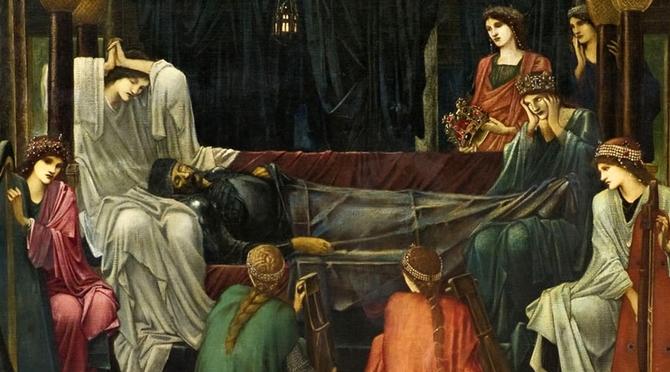
End Notes:
Birth: There are several questions around King Arthur's origins, some claim that he was a Roman general, and most believe that he lived around 500 AD. He is fully recorded as a historical figure for the first time by Geoffrey of Monmouth, but while his importance and endurance are clear, his origins are still speculated on.
Differences: This poem addresses some of the most important changes between the two most influential sources on King Arthur: Monmouth's History of the Kings of Britain and Mallory's Mort de Arthur. Sir Kay, Gawain and Bedivere were originally considered to be King Arthur's most skilled knights. This changed in Mallory's retelling, where Sir Kay was known as an incompetent braggart, Gawain as a liar and and Bedivere is all but forgotten. Their places are mostly held but the new additions: Sir Lancelot and Sir. Galahad..
Overheard 1939: Winston Churchill's speeches often took on elements of a heroic myth (Charteris-Black, 2011). Often, he used language that could be tied back to the mythic. Thus it could be claimed that he understood the need for the people of a heroic archetype, and through his speeches encouraged the resurgence of heroes like King Arthur in the British mind.
Broadcast: The purpose of this podcast is to show the prevalence of King Arthur in the popular culture during World War II. Both of the dramas mentioned are real, as is the analogy of the RAF to knights, are real. The analogy about the RAF was apparently a favored one by radio newscasters (Simpson, 2003).
This project contains references to several versions of the Matter of Britain, particularly Monmouth, Mallory, and White's version of the events, as well as considerations of Churchill's World War II speeches and popular poetry during World War II and transcripts of poems and radio broadcasts from the time.
